Transition belt
Kentucky yard facts: grass, season and the rules that apply
Kentucky sits between the cool north and the warm south, so most lawns are cool-season grass that works hardest in spring and fall. Here is how that shapes the jobs, and who regulates the work.
By LawnElm Editorial Team Updated 6 min read
- Grass belt
- Transition
- Common grasses
- Tall fescue, bluegrass
- Spray for hire
- License required
Short version
The University of Kentucky says Kentucky is in the transitional climatic zone and that most turfgrasses suited to the state are cool-season grasses, with tall fescue called an excellent choice for home lawns. Anyone applying pesticides to turf or lawns under a license must be certified in a category that fits the work; the Kentucky Department of Agriculture administers that rule. Kentucky's underground facilities law asks for at least two full working days' notice before you dig.
Kentucky at a glance
Grass and climate
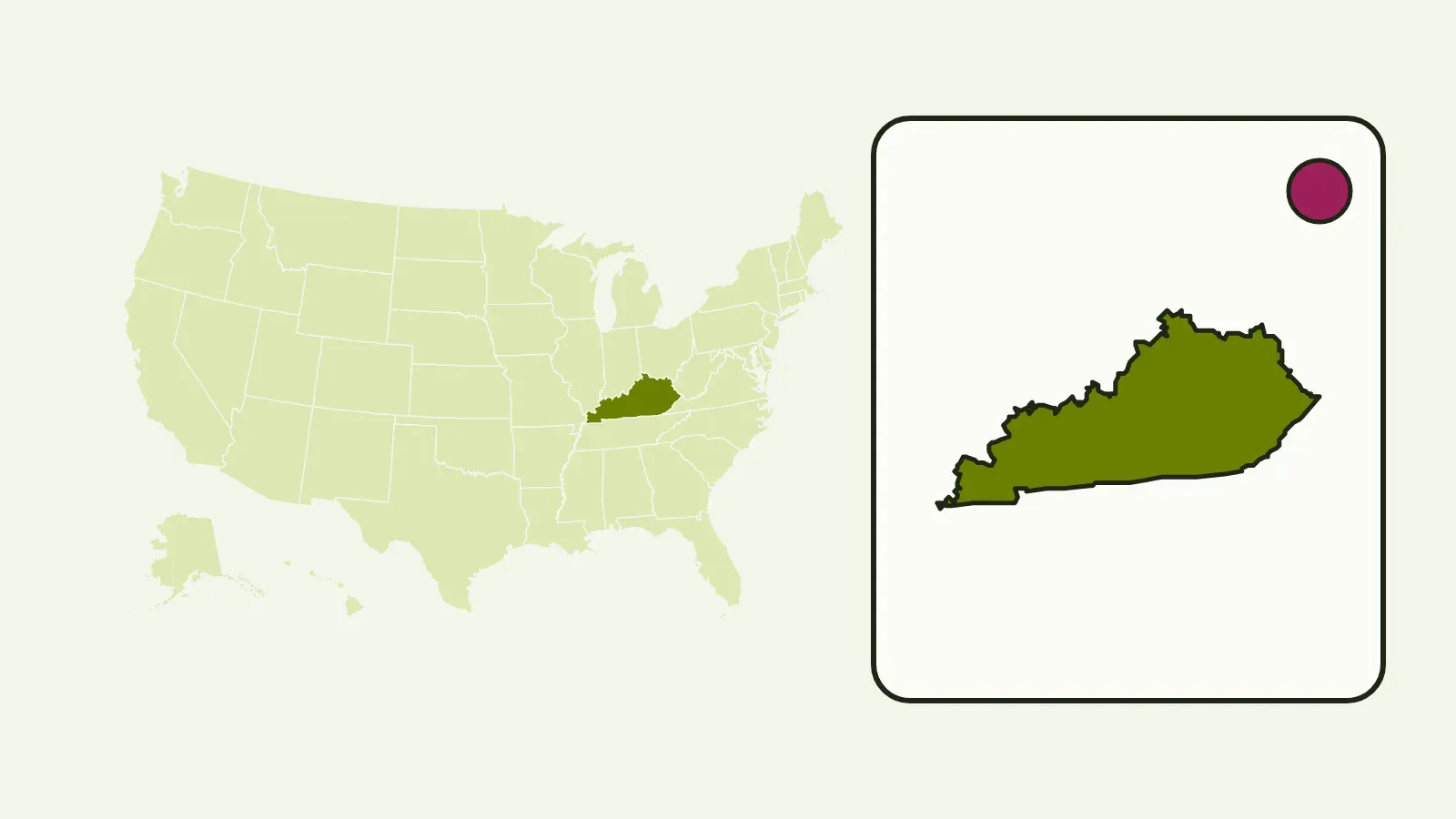
The University of Kentucky Extension publication on Kentucky turfgrasses says the state is "situated in the transitional climatic zone of the United States." It says the majority of turfgrasses suited to Kentucky are cool-season grasses, that warm-season grasses go dormant in fall and winter, and that winters in Kentucky may be too cool for warm-season grasses. On the state map that makes Kentucky a transition belt state.
- Tall fescue is called an excellent choice for home lawns across Kentucky. It handles heat and drought better than other cool-season grasses but may go dormant in a very hot, dry summer without irrigation.
- Kentucky bluegrass is used mainly on lawns and athletic fields. It needs full sun and does not tolerate heat as well as tall fescue.
- Zoysiagrass is found on home lawns in the transition zone. It has excellent cold tolerance and grows slowly.
- Bermudagrass in its common form is found throughout the state, from road edges to home lawns, but it lacks cold tolerance and is generally not recommended.
Perennial ryegrass is occasionally used on lawns, and the publication says fine fescues are not recommended alone in Kentucky lawns. If you are unsure what you have, ask your county extension office before you seed or sod.
Mowing and feeding
The University of Kentucky's mowing publication, AGR-209, says cool-season grasses grow quickly in spring and fall and slow in summer, while bermudagrass grows fast in summer, slows in spring and fall, and does not grow in winter. It advises removing no more than one third of the leaf at a time, so a lawn kept at 2 inches is mowed when it reaches 3 inches. See lawn mowing for how that sets your schedule.
| Grass | Kind | Mowing height |
|---|---|---|
| Bermudagrass | Warm-season | 1 to 2 inches |
| Zoysiagrass | Warm-season | 1 to 3 inches |
| Perennial ryegrass | Cool-season | 1.5 to 2.5 inches |
| Kentucky bluegrass | Cool-season | 2 to 3.5 inches |
| Tall fescue | Cool-season | 2 to 3.5 inches |
The same publication says to leave clippings on the lawn for most lawns and to remove them only when they clump, when the grass is wet or tall, or when disease is present.
For feeding, the University of Kentucky's AGR-212 puts cool-season lawn nitrogen in the fall: 1 pound per 1,000 square feet in October for every maintenance level, with September, November and December added at higher levels. Annual totals are 2 to 4 pounds for Kentucky bluegrass, perennial ryegrass and tall fescue, and 3 to 4 pounds for bermudagrass and 1 to 2 pounds for zoysiagrass, applied from late spring into summer. It says to use no more than 1 pound of nitrogen per 1,000 square feet at a time. The lawn supplies tool turns a rate like that into bags.
Rules for spraying and fertilizer
Kentucky's pesticide applicator rule, 302 KAR 26:020, is administered by the Kentucky Department of Agriculture. It says anyone applying pesticides under a commercial or noncommercial license must be at least 18 and certified by examination in a category consistent with the application. A registered trainee working under the direct supervision of a licensed person is the exception. The ornamental, turf and lawn care category, Category 3, covers applying pesticides or impregnated fertilizer to control insects, weeds and diseases in turf and lawns.
The sources listed below do not describe a statewide limit on how a homeowner or a crew applies lawn fertilizer, so check with your city and your HOA. The University of Kentucky advises applying phosphorus and potassium only if a soil test shows they are needed, and keeping fertilizer off sidewalks and other hard surfaces, because phosphorus contamination of surface water mostly comes from runoff.
The sources listed below do not describe a separate state license for a mowing or landscaping crew. Spraying is the regulated part of the work.
Call 811 and local rules
The Kentucky Public Service Commission's guidance on the Kentucky Underground Facilities Protection Act, KRS 367.4901 through 367.4917, says a locate request must be made no less than two full working days and no more than ten working days before work begins. Kentucky 811 says a locate request is valid for 21 calendar days and that contacting 811 is required by law. The PSC says homeowners are only partly exempt: a homeowner who does not use mechanized equipment and is not digging in a utility easement or right-of-way has limited exemptions, but a homeowner can still be penalized for hitting a gas line, and it recommends having service lines located before digging. The steps are in call 811 before you dig.
Cities, water utilities and homeowners' associations can add rules for grass height, watering and yard work. No particular city's ordinance is covered here, so read yours or ask the city office. The guide to HOA and city yard rules lists what to look for.
Hiring a crew in Kentucky
Ask any company that offers weed, grub or insect treatments for its license and the category of the person who will apply, and get the product and the rate in writing. The Department of Agriculture publishes a public applicator search you can use to look a name up. The guide to hiring a lawn crew lists what a written quote should say.
Questions people ask
What kind of grass do most Kentucky lawns have?
Mostly cool-season grass. The University of Kentucky says the majority of turfgrasses suited to Kentucky are cool-season, and calls tall fescue an excellent choice for home lawns across the state.
Why does my Kentucky lawn slow down in summer?
Cool-season grasses grow quickly in spring and fall and slow in summer, according to the University of Kentucky. Tall fescue may go dormant in a very hot, dry summer without irrigation.
Does a lawn crew need a license to spray in Kentucky?
Kentucky's rule 302 KAR 26:020 says anyone applying pesticides under a license must be certified by examination in a category consistent with the work. Category 3 covers pesticide application to turf, lawns and ornamentals.
How much notice does Kentucky 811 need?
The Kentucky Public Service Commission says a locate request must be made no less than two full working days and no more than ten working days before work begins.
Sources
- Turfgrasses of Kentucky, AGR-216 (University of Kentucky Extension)
- Mowing your Kentucky Lawn, AGR-209 (University of Kentucky Extension)
- Fertilizing Your Lawn, AGR-212 (University of Kentucky Extension)
- 302 KAR 26:020 (Kentucky Legislative Research Commission)
- Pesticide programs (Kentucky Department of Agriculture)
- Frequently asked questions about Kentucky 811 (Kentucky Public Service Commission)
- Kentucky 811
Checked on November 20, 2026. Licensing rules and local ordinances change; confirm with the Kentucky Department of Agriculture, your county extension office and your city before you hire or spray.
Next in the yard
-

Yard job
Lawn mowing
How tall to mow, how often, and what a weekly visit includes.
-

Yard job
Lawn fertilizing
When to feed cool- and warm-season lawns, how to size a feeding, and what rules apply.
-

Guide
Call 811 before you dig
How the free 811 locate works, why notice periods differ by state, and who calls when a crew digs.