Cool belt
Massachusetts yard facts: grass, season and the rules that apply
Most Massachusetts lawns are cool-season grass. A state rule limits phosphorus and says when and where lawn fertilizer may go on. Here is how that shapes the jobs, and who regulates the work.
By LawnElm Editorial Team Updated 5 min read
- Grass belt
- Cool-season
- Common grasses
- Tall fescue, fine fescue
- Fertilizer law
- 330 CMR 31 (MDAR)
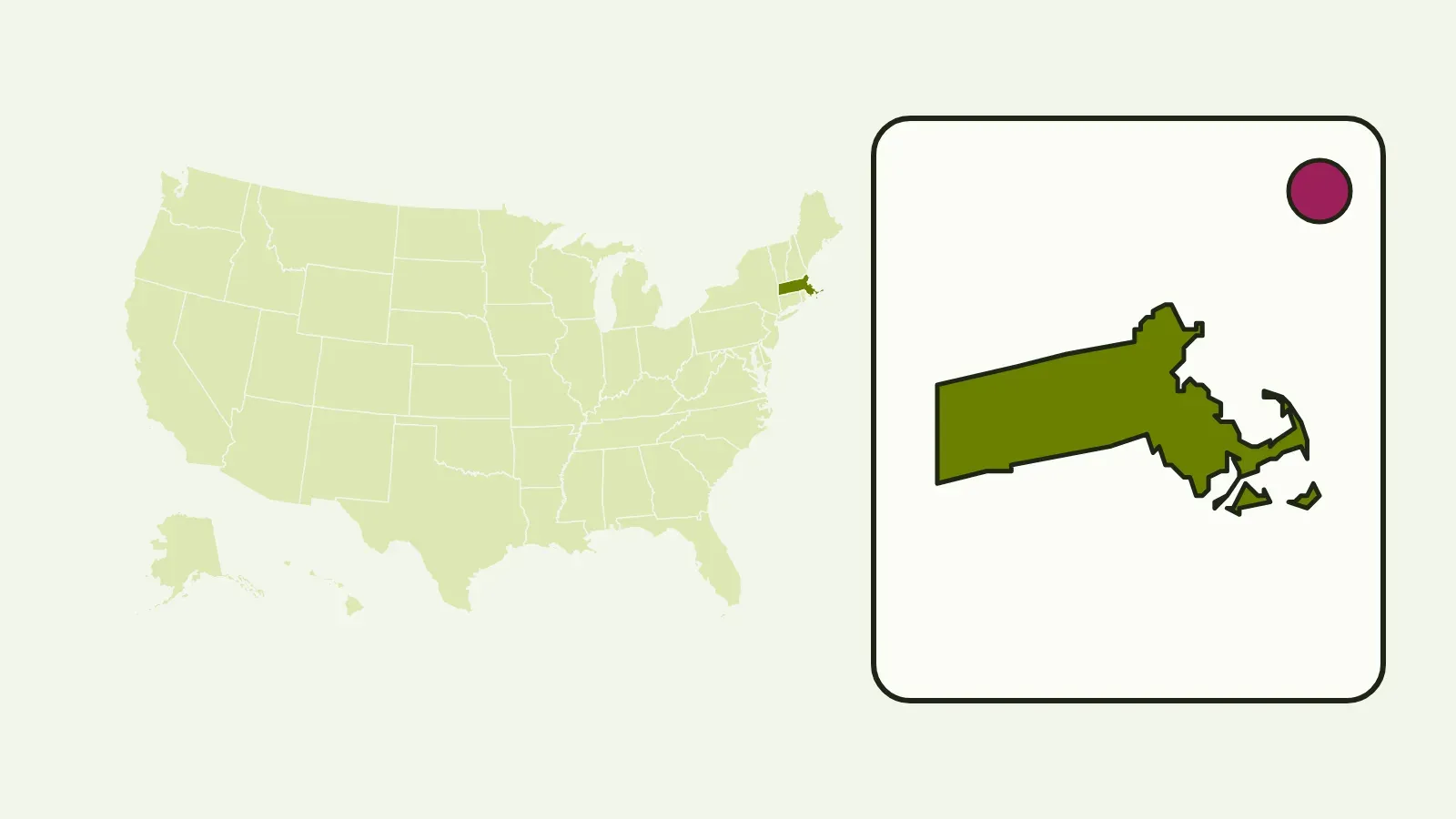
Short version
Most Massachusetts lawns are cool-season grass. The state environmental department's lawn guide names tall fescue as the most suitable grass in most areas, and UMass Extension says to mow at 2 to 3 inches. The Department of Agricultural Resources wrote 330 CMR 31.00, which limits phosphorus on lawns and bars fertilizer on frozen, snow-covered and brown turf. Its Pesticide Board sets the licensing rules for people who apply pesticides.
Massachusetts at a glance
Grass and climate
The Massachusetts Department of Environmental Protection publishes a guide called Lawns and Landscapes in Your Watershed. It says tall fescue is the most suitable grass in most areas of the state, and calls it drought tolerant, resistant to disease and pests, and often able to survive New England winters. For shady and less fertile spots it suggests fine fescues such as red fescue, and it recommends a blend of seeds so the lawn is more tolerant of pests and disease.
The same guide says that if you choose suitable grasses, watering in the Northeast is usually unnecessary. It calls yellowing in a hot, dry spell a normal state called dormancy that a healthy lawn can withstand, and it says most lawns need less than one inch of water to soak grass roots that are 4 to 6 inches long. The guide is undated and cites publications from the 1990s, so treat it as older advice and ask UMass Extension what holds up in your town now.
- Tall fescue is the grass the state guide names for most areas.
- Fine fescues such as red fescue are suggested for shade and less fertile soil.
- A seed blend is recommended over a single variety.
Mowing and feeding
UMass Extension's lawn mowing fact sheet says to keep the lawn at the highest cutting height that looks good and suits how you use it, and that for most lawns a height of 2 to 3 inches is best. It repeats the one-third rule: never remove more than a third of the shoot growth in one mowing. It adds that clippings need not be bagged, because they return nitrogen and can reduce the need for fertilizer, and that you should keep the blade sharp and avoid mowing when the soil is very wet, to limit compaction. The fact sheet was last revised in 2011. See lawn mowing for how the one-third rule works.
The MassDEP guide suggests leaving clippings first, then using organic or slow-release fertilizer only if a soil test and your plants call for more. It says to fertilize in the fall, watch the weather so a downpour does not wash it off, and never exceed the label rate. It points to the University of Massachusetts Soil Testing Laboratory for a soil test. The lawn supplies tool turns a label rate into bags, and lawn fertilizing explains the timing.
Who regulates what
The Department of Agricultural Resources (MDAR) wrote 330 CMR 31.00, which limits plant nutrients on lawns and non-agricultural turf. Section 31.05 says no one may buy and apply phosphorus fertilizer, or hire someone to apply it under a service contract, unless a soil test taken within the last three years shows the lawn needs phosphorus, or the product is used to establish a new lawn in its first growing season. That last point matters when you hire a crew: the rule covers the person who authorizes the work.
The same section lists where no plant nutrients may go: frozen, snow-covered or saturated soil, or soil where flooding is expected; within 20 feet of surface water with a broadcast spreader, or 10 feet with a drop spreader or a rotary spreader with a deflector; within 100 feet of surface water used for public supply; on drought-dormant, cold-dormant or brown turf; and on pavement. This page covers only section 31.05, in a copy amended in January 2018. Read the full chapter on Mass.gov before you apply.
For pesticides, UMass Extension's licensing page says the Pesticide Board at MDAR sets the licensing and certification rules. Commercial applicators hold either an applicator license, which requires the core exam, or a commercial certification, which requires at least two years of experience and an exam. Both need continuing education every three years. The sources reviewed did not show which category covers lawn spraying, so ask any crew that sprays weeds or grubs for its license or certification, the category, and a copy.
The sources reviewed also did not cover a state license for mowing, landscaping or tree work, or the notice period for a utility locate. Call 811 before you dig, and read call 811 before you dig for what to ask.
Local rules and hiring
The MassDEP guide tells you to observe local outdoor water bans, and notes that several communities have imposed them after water shortages. Towns, water districts and homeowners' associations can set their own rules for watering and yard work, so check with yours before a project. The HOA and city yard rules guide lists what to ask.
Mowing and basic yard work are not what the pesticide rules cover, but spraying for others is. Get the product, the rate and the license in writing, and ask whether the crew knows the 330 CMR 31 phosphorus and frozen-ground rules. The guide to hiring a lawn crew lists what a written quote should say.
Questions people ask
What grass do most Massachusetts lawns have?
Cool-season grass. The state environmental department's lawn guide names tall fescue as the most suitable grass in most areas of Massachusetts and suggests fine fescues for shade. The guide is older, so ask UMass Extension about your town.
Can I fertilize my lawn in winter in Massachusetts?
Under 330 CMR 31.05, no plant nutrients may be applied to frozen soil, snow-covered soil or saturated soil. The rule also bars application to drought-dormant, cold-dormant or brown turf.
Do I need a soil test before using phosphorus?
330 CMR 31.05 allows phosphorus fertilizer on a lawn only if a soil test taken within three years shows more is needed, or if you are establishing a new lawn in its first growing season.
Does a company need a license to spray my lawn?
MDAR's Pesticide Board sets the licensing and certification rules, and UMass Extension describes commercial applicator licenses and certifications. Ask the company for its license or certification and the category it covers.
Sources
- Lawn Mowing (UMass Extension, Center for Agriculture, Food and the Environment, revised 2011)
- Lawns and Landscapes in Your Watershed (Massachusetts Department of Environmental Protection, Mass.gov)
- 330 CMR 31.00, plant nutrient application requirements (Massachusetts Department of Agricultural Resources, Mass.gov)
- 330 CMR 31.05, text amended 2018 (Cornell Legal Information Institute copy)
- Pesticide Licensing Information (UMass Extension Pesticide Education Services)
Checked on November 20, 2026. Licensing rules and local ordinances change; confirm with the Massachusetts Department of Agricultural Resources and your town before you hire or spray.
Next in the yard
-

Yard job
Lawn mowing
How tall to mow, how often, and what a weekly visit includes.
-

Yard job
Lawn fertilizing
When to feed cool- and warm-season lawns, how to size a feeding, and what rules apply.
-

Guide
How to hire a lawn crew
Licenses, insurance and written quotes to check before a lawn or landscape crew starts work.