Cool belt
Rhode Island yard facts: grass, season and the rules that apply
Rhode Island's main lawn guidance comes from the University of Rhode Island, and much of it is about protecting water. Here is that advice and who regulates the work.
By LawnElm Editorial Team Updated 6 min read
- Grass belt
- Cool-season
- Common grasses
- Fescues (URI advice)
- Spray for hire
- License required
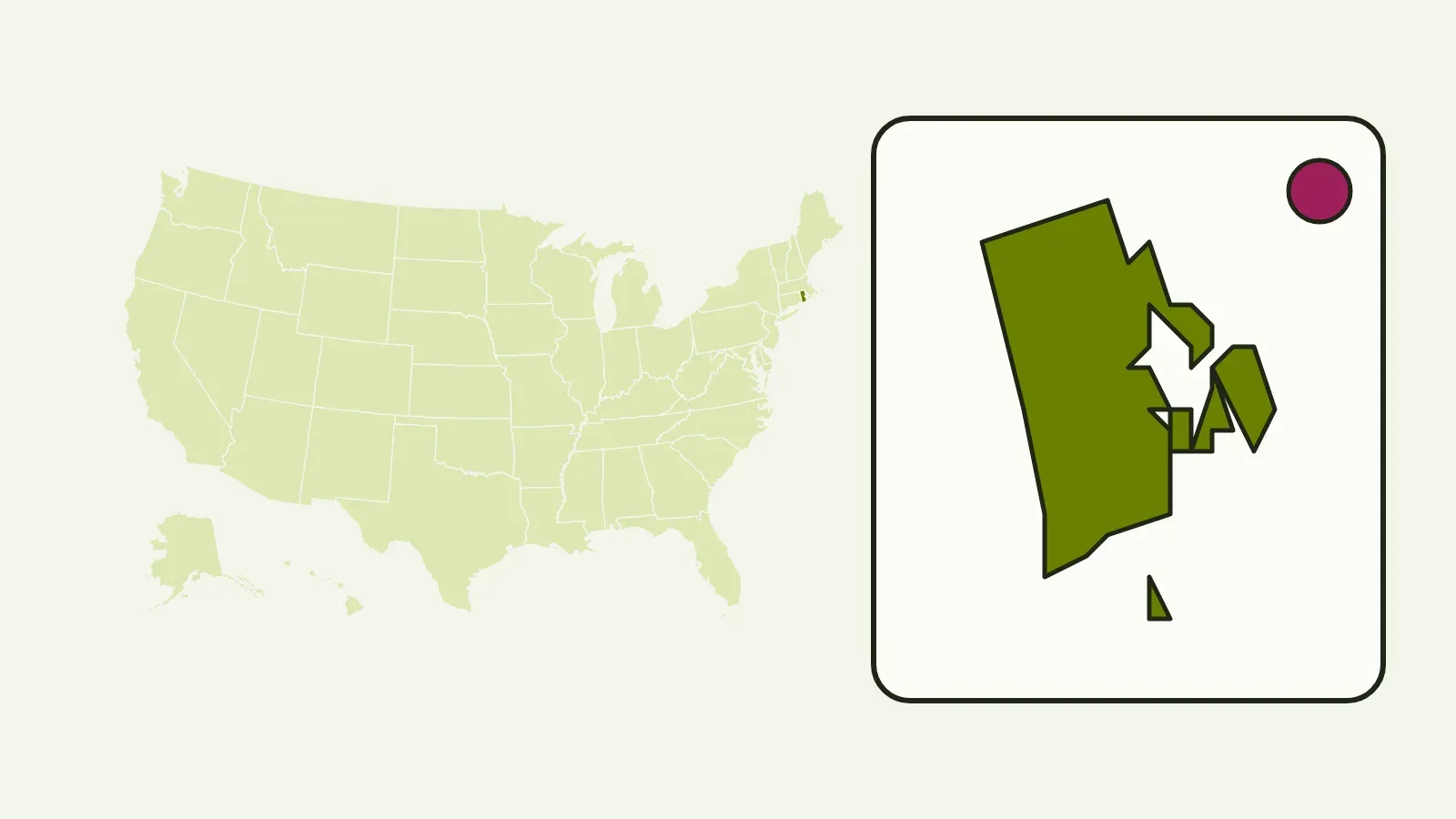
Short version
The University of Rhode Island's lawn guidance favors fescues, mowing at 2 to 3 inches, and fertilizing only after spring green-up and no later than October 15. The state's pesticide rules require a commercial applicator license for anyone applying pesticides for hire, and the Department of Environmental Management administers the state's fertilizer and pesticide programs.
Rhode Island at a glance
Grass and climate
The University of Rhode Island's healthy lawn care guide suggests grasses such as fescues that require less water and fewer nutrient inputs. It does not list every grass in use, so ask your URI Cooperative Extension contact or a local turf specialist what has held up in your soil and shade. LawnElm places Rhode Island in the cool belt, where cool-season grasses grow hardest in spring and fall.
URI's guidance is written under its safe water program, and it frames lawn care as water protection as well as appearance. Its advice on buffers, spills and fertilizer timing, below, follows from that.
Mowing and feeding
URI says mowing at heights between 2 and 3 inches is best to encourage deeper roots, discourage weeds and reduce evaporation. For nitrogen management, it says to mow as high as possible, leaving at least 3 inches, so clippings can return to the lawn. Keep the blades sharp. See lawn mowing for the one-third rule.
- Timing: do not apply fertilizer before spring green-up and apply no later than October 15. URI says to avoid mid-summer feeding.
- Amount: apply a maximum of 2 pounds of nitrogen per 1,000 square feet per year on an established lawn 10 years old or older. URI suggests starting at one-half to one-third of the label rate.
- Phosphorus: test the soil first, and use phosphorus-free fertilizer on established lawns unless the test shows low levels.
- Water: limit total water, including rainfall, to 1 inch per week.
URI presents these as recommendations, not regulations. The lawn supplies tool turns a pounds-of-nitrogen figure into bags.
Pesticides, fertilizer and licenses
Rhode Island's pesticide regulation, 250-RICR-40-15-2, says each person who applies a pesticide, other than a restricted use or state limited use pesticide, must hold a valid commercial applicator license issued by the Director. It excludes land owned or rented by the applicator or the applicator's employer. It also says no general-use pesticide may be applied for hire by an unlicensed or non-certified person without the direct supervision of a certified or licensed commercial applicator.
The same regulation sets certification categories for restricted-use pesticides. Category 3 is ornamental and turf pest control, with subcategories for shade trees, custom grounds and interior plantings. Custom grounds covers pesticides used on ornamental shrubs, flowers and turf. If a crew sprays your lawn, ask for the license number and a copy of the license.
The state's Department of Environmental Management runs the pesticide program. Its Division of Agriculture pesticides unit certifies and licenses commercial applicators. For fertilizer, the state's fertilizer regulation, 250-RICR-40-20-10, is aimed at the sale and use of commercial fertilizers, and the active rule text covers labeling, sampling and registration. It does not set lawn application limits, so URI's advice above is the practical guide. Rhode Island's call-before-you-dig system is run by Dig Safe, a notification center that does not mark lines itself. See call 811 before you dig.
Local rules and hiring a crew
Cities, towns and homeowners' associations can set their own rules on grass height, watering and yard work. Read yours before a project; the HOA and city yard rules guide explains what to look for.
Mowing and basic yard work do not need a pesticide license, but spraying does. Ask any company that offers weed or grub treatments for its license number, and get the product and rate in writing. The guide to hiring a lawn crew lists what a quote should say.
Questions people ask
How tall should I mow a lawn in Rhode Island?
The University of Rhode Island says 2 to 3 inches is best, and at least 3 inches if you want clippings to return nitrogen to the lawn.
When should I fertilize a Rhode Island lawn?
URI advises not applying before spring green-up and no later than October 15, and avoiding mid-summer feeding. These are recommendations, not state rules.
Do I need a license to spray lawns for hire in Rhode Island?
Rhode Island's pesticide regulation says a person who applies a general-use pesticide for hire needs a valid commercial applicator license, or must work under the direct supervision of a certified or licensed applicator.
Which agency regulates pesticides in Rhode Island?
The Rhode Island Department of Environmental Management. Its Division of Agriculture pesticides unit certifies and licenses commercial applicators.
Sources
- Healthy lawn care (University of Rhode Island)
- Rules and Regulations Relating to Pesticides, 250-RICR-40-15-2 (Rhode Island Secretary of State)
- Rules and Regulations Relating to Fertilizers, 250-RICR-40-20-10 (Rhode Island Secretary of State)
- Pesticide Safety and IPM Training (Rhode Island DEM)
- Pesticides (Rhode Island DEM)
- R.I. General Laws § 2-7-3, Definitions (Rhode Island Legislature)
- Dig Safe (Rhode Island)
Checked on November 20, 2026. Licensing rules and local ordinances change; confirm with the Rhode Island Department of Environmental Management and your town before you hire or spray.
Next in the yard
-

Yard job
Lawn fertilizing
When to feed cool- and warm-season lawns, how to size a feeding, and what rules apply.
-

Guide
HOA and city yard rules
Who sets yard rules, from the HOA to the city to state law, and where easements fit.
-

Guide
How to hire a lawn crew
Licenses, insurance and written quotes to check before a lawn or landscape crew starts work.