Warm belt
Texas yard facts: grass, season and the rules that apply
Most Texas lawns are warm-season grass that grows from spring to early fall and goes dormant in winter. Here is how that shapes the jobs, and who regulates the work.
By LawnElm Editorial Team Updated 5 min read
- Grass belt
- Warm-season
- Common grasses
- St. Augustine, bermuda
- Spray for hire
- License required
Short version
Most Texas lawns are warm-season grasses, mainly St. Augustine and bermudagrass, which grow in warm months and turn straw-colored at the first frost. The Panhandle can grow cool-season grasses. The Texas Department of Agriculture licenses people who apply pesticides to lawns for hire, and it regulates fertilizer through its Feed and Fertilizer Control Service.
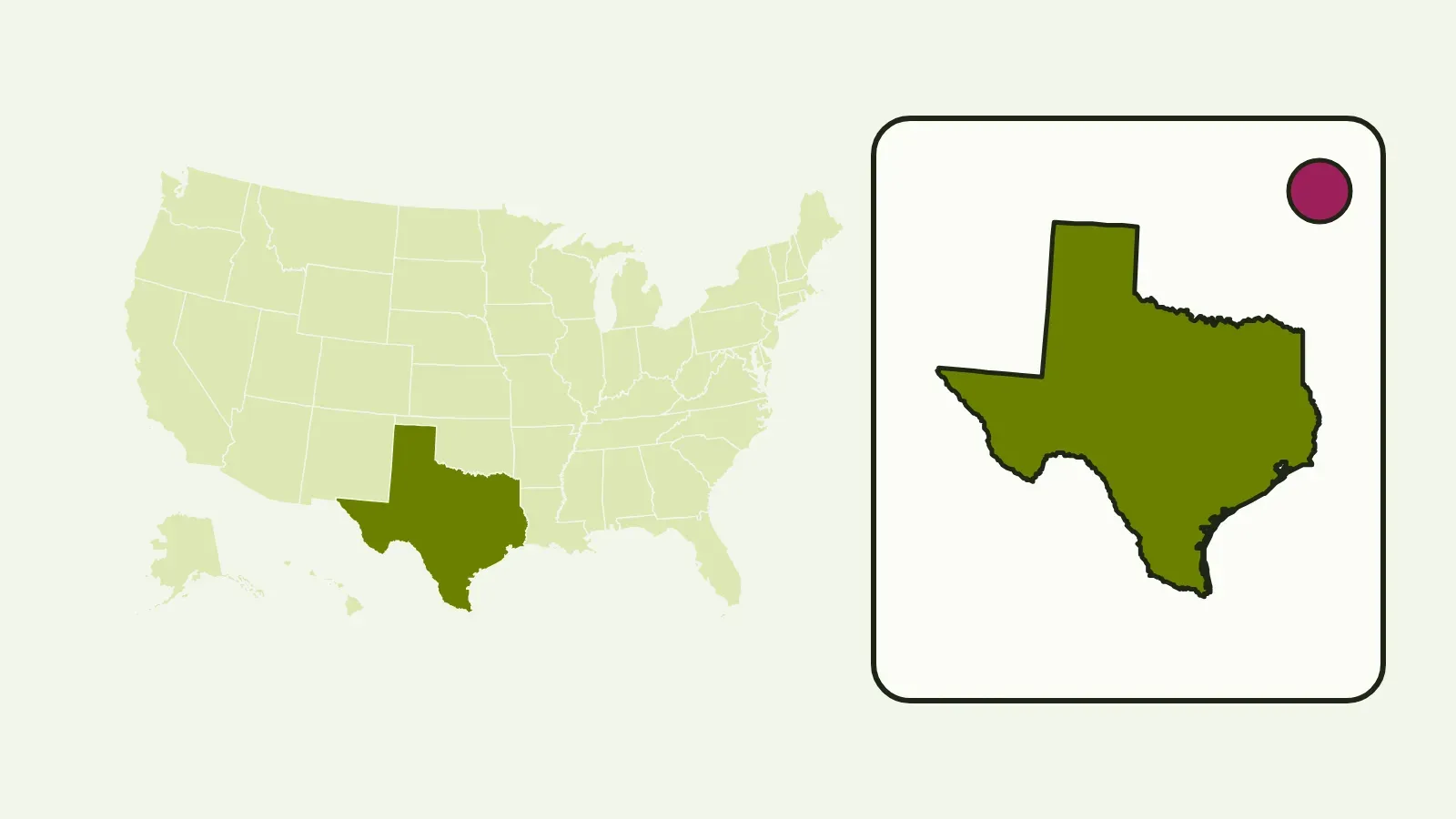
Texas at a glance
Grass and climate
Texas stretches across several climates, and Texas A&M AgriLife Extension describes the split plainly. In the cooler, drier Panhandle, cool-season grasses such as bluegrass and fescue can be grown. In the subtropical south, warm-season grasses such as bermudagrass and St. Augustine are best adapted. In between, both kinds can grow with good management.
Warm-season grasses grow in late spring, summer and early fall, according to an older Texas Agricultural Extension guide, and they turn straw-colored at the first frost and may go dormant in winter, as AgriLife's turfgrass selection guide explains. That sets the lawn year: the mowing, feeding and watering jobs on your yard calendar follow the grass, not the date.
Aggie Turf describes a zone, between the cool north and the warm south, where summers get a bit too hot for cool-season grasses such as tall fescue and Kentucky bluegrass and winters a bit too cold for many warm-season grasses such as bermudagrass and St. Augustine. It says this makes choosing the right grass especially challenging. If your yard sits in that middle band, ask your county extension agent which grass has held up in your neighborhood before you reseed or sod.
- St. Augustine is best adapted to East and South Texas and is less cold-hardy than bermudagrass, as an AgriLife guide explains. It is the most shade tolerant of the warm-season grasses.
- Bermudagrass is a fine-textured warm-season grass that needs frequent mowing, according to Aggie Turf.
- Buffalograss and zoysia are also grown. AgriLife suggests buffalograss for areas with limited irrigation.
Mowing and feeding
Texas A&M's turfgrass specialist Becky Grubbs says St. Augustine should be maintained between 2.5 and 4 inches, and notes that people often mow it much lower, the way they would a bermudagrass lawn. The one-third rule applies to every grass; see lawn mowing for how it works.
Aggie Turf's St. Augustine calendar says to make the first fertilizer application when the lawn is actively growing and has been mowed at least two times, then to apply 0.5 to 1 pound of nitrogen per 1,000 square feet, one to four times during the growing season. The lawn supplies tool turns a rate like that into bags.
Who regulates what
The Texas Department of Agriculture says anyone who applies a pesticide to plants, trees, shrubs or grass for hire must be licensed, either by TDA in its landscape maintenance category (3A) or by the Structural Pest Control Service. A commercial applicator must pass the general, laws and regulations, and ornamental and turf pest control exams. If a crew sprays your lawn, ask which license it holds and for a copy.
TDA also lists the Texas Feed and Fertilizer Control Service among the agencies it works with, and says it regulates fertilizer. That covers the fertilizer products sold in the state. Cities, water districts and homeowners' associations can add their own rules for watering and yard work, so check with yours before a project.
Hiring a crew in Texas
Mowing and basic yard work do not need a license for the crew, but spraying does. Ask for the license number of any company that offers weed, grub or fire ant treatments, and get the product and rate in writing. The guide to hiring a lawn crew lists what a written quote should say.
Questions people ask
What kind of grass do most Texas lawns have?
Mostly warm-season grasses. The most commonly used in Texas are St. Augustine, bermudagrass and buffalograss, according to a Texas A&M publication. Zoysia is also grown.
Do I need a license to spray my own lawn?
The TDA licensing page covers applying pesticides to lawns for hire, so a crew that sprays your lawn needs a license. Check the Texas Department of Agriculture for rules that apply to your own use of restricted products.
Why does my Texas lawn turn brown in winter?
Warm-season grasses turn straw-colored at the first frost and may go dormant during winter. That is normal for bermudagrass, St. Augustine and zoysia.
Which agency regulates fertilizer in Texas?
The Texas Feed and Fertilizer Control Service regulates fertilizer, according to the Texas Department of Agriculture. Local governments may set their own rules for use.
Sources
- Applying Pesticides to Lawns, Trees, Ornamentals (Texas Department of Agriculture)
- Licensing to Apply Pesticides to Lawns, Trees and Ornamentals (Texas Department of Agriculture)
- Turfgrass Selection for Texas (Texas A&M AgriLife Extension)
- Mowing recommendations for Texas (Texas A&M AgriLife Today)
- St. Augustine management calendar (Aggie Turf, Texas A&M)
- Turfgrass Lawn Care Summer 2019 (Aggie Turf, Texas A&M)
- Texas Landscape Water Guide (Texas Water Development Board)
Checked on November 20, 2026. Licensing rules and local ordinances change; confirm with the Texas Department of Agriculture and your city before you hire or spray.
Next in the yard
-

Yard job
Lawn mowing
How tall to mow, how often, and what a weekly visit includes.
-

Yard job
Lawn fertilizing
When to feed cool- and warm-season lawns, how to size a feeding, and what rules apply.
-

Guide
How to hire a lawn crew
Licenses, insurance and written quotes to check before a lawn or landscape crew starts work.