Transition belt
Virginia yard facts: grass, fertilizer and the rules that apply
Virginia sits where cool-season and warm-season grasses overlap, so both kinds are grown. Here is how that shapes the jobs, and who regulates the work.
By LawnElm Editorial Team Updated 5 min read
- Grass belt
- Transition
- Common grasses
- Tall fescue, bermuda
- Fertilizer law
- Phosphorus-free by law
Short version
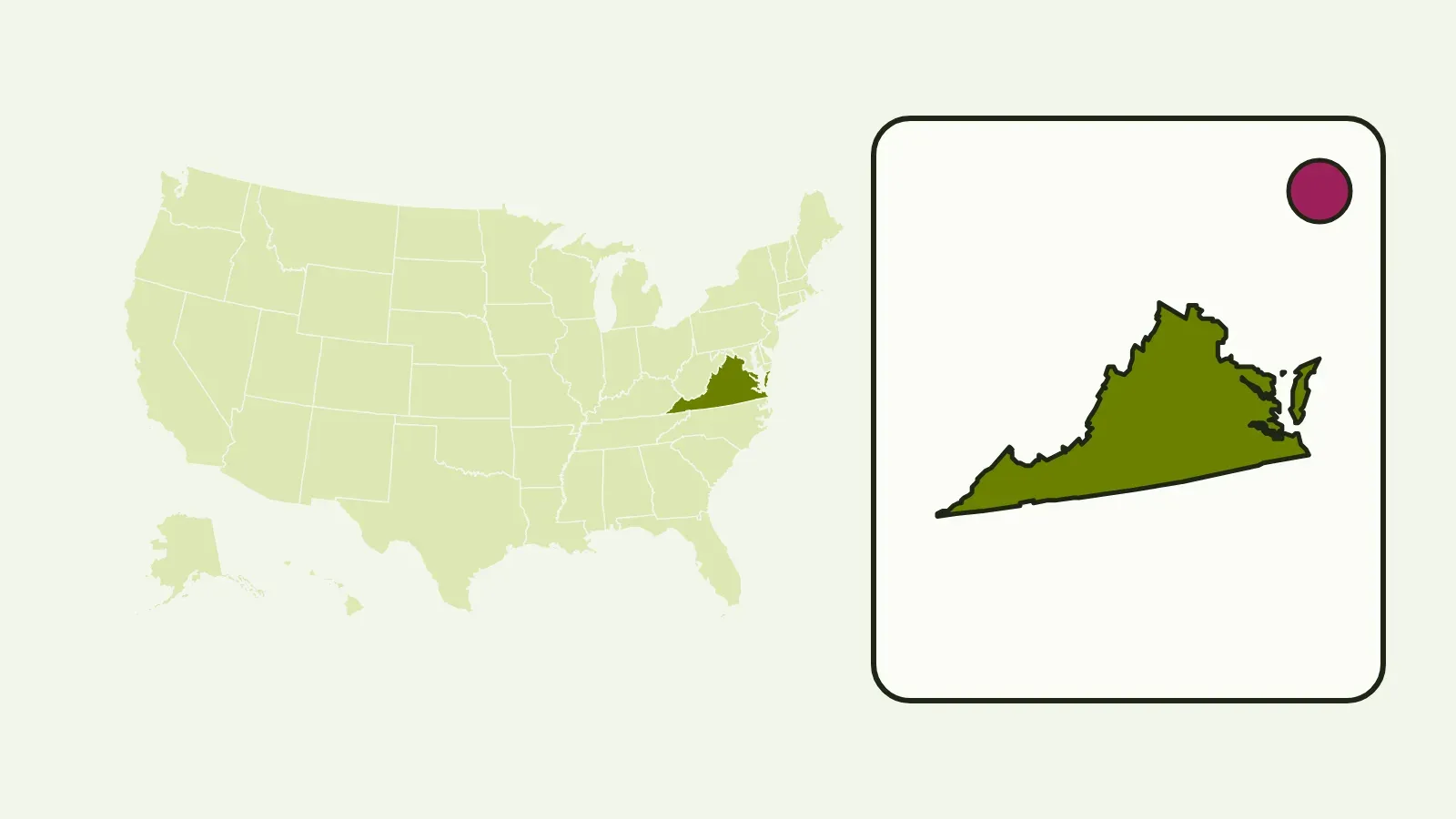
Virginia lawns are a mix of cool-season grasses such as tall fescue and warm-season grasses such as bermudagrass and zoysiagrass. Virginia Cooperative Extension calls the Virginia Peninsula a transition zone where both kinds can struggle. State law bars lawn maintenance fertilizer with any phosphorus, and the Virginia Department of Agriculture and Consumer Services certifies commercial pesticide applicators, including a turf category.
Virginia at a glance
Grass and climate
Virginia Cooperative Extension lists two groups of lawn grass for the state. The cool-season group is tall fescue, Kentucky bluegrass, fine fescues and perennial ryegrass. The warm-season group is bermudagrass and zoysiagrass across much of the commonwealth, plus St. Augustinegrass and centipedegrass in the Tidewater area.
The York County extension office describes the Virginia Peninsula as a transition zone where both grass types can struggle. The lawn next door may not suit yours. Ask your local extension office which grass has held up in your neighborhood before you reseed or sod.
- Tall fescue is the cool-season lawn grass in the York County calendar. It is seeded from September 1 to October 1, and sod can go down year-round except in mid-winter when the ground is frozen.
- Bermudagrass and zoysiagrass are seeded or sodded from mid-spring through mid-summer, when the soil is 65 to 75 degrees. Zoysia must be established with sod or sprigs.
- Fall seeding: extension says late summer to mid-fall is the best time to establish cool-season turf. Warm-season grasses should not be planted in the fall, except as sod in early to mid-fall.
Mowing and feeding
The York County calendar keeps fescue at 2.5 to 3 inches, with 3 inches in summer. It keeps bermudagrass and zoysiagrass at 1 to 1.5 inches. Virginia Cooperative Extension also applies the one-third rule: never remove more than one third of the leaf blade at one mowing. See lawn mowing for how it works.
Feeding follows the grass. The county calendar puts fescue feeding between August 15 and November, with the main window in September, October and November, and none in December. Bermudagrass and zoysiagrass are fed from mid-spring through mid-summer, starting about 3 to 4 weeks after spring green-up is done. Extension also says never to fertilize frozen soil, and to test the soil at least once every three years. The lawn supplies tool turns a label rate into bags, and lawn fertilizing explains the numbers.
Fertilizer law
Virginia regulates what is in the bag. Va. Code § 3.2-3607 says that, starting December 31, 2013, no lawn maintenance fertilizer with more than zero percent phosphorus may be registered or offered for sale, distribution or use in the state. Fertilizer made mainly for gardens, trees, shrubs and indoor plants is excluded. From July 1, 2014, lawn fertilizer can be registered and sold only if its directions give nitrogen rates that are consistent with the Virginia Nutrient Management Standards and Criteria for turfgrass.
Another section, § 3.2-3602.1, in the 2018 text of the Code, calls for state regulations that certify the competence of contractor-applicators and licensees who apply fertilizer to nonagricultural land. It also sets annual reporting for those who apply lawn fertilizer to more than 100 acres of such land a year. If a crew feeds your lawn, ask whether it is certified and what product and rate it applies.
Pesticide licensing and 811
The Virginia Department of Agriculture and Consumer Services (VDACS) runs the Office of Pesticide Services, which certifies pesticide applicators, registers products and licenses pesticide businesses. Its commercial certification categories include 3-A, Ornamental Pest Control, and 3-B, Turf Pest Control. The turf category covers pesticide use on golf courses, residential lawns, parks and cemeteries.
VDACS says a commercial applicator for hire is not issued an active certificate unless the person holds a valid pesticide business license or works for someone who does. To sit for the exam, a person must have been a Virginia Registered Technician for at least one year or show enough education, training or experience. Ask any crew that sprays your lawn for the certificate and the business license, and get copies.
Virginia 811 tells you to contact it three days before a digging project, and describes the service as free. The page does not say how the days are counted, so ask when you call, and read the 811 guide before a fence, deck or tree job.
Local rules and hiring a crew
Virginia cities, counties and homeowners' associations can add rules for watering, grass height and yard upkeep. This page does not list them, so check yours before a project. The guide to HOA and city yard rules shows what to look for.
Mowing and basic yard work do not call for a pesticide certificate, but spraying does. Get the product and rate in writing. The guide to hiring a lawn crew lists what a written quote should say.
Questions people ask
What kind of grass do most Virginia lawns have?
Both kinds are grown. Virginia Cooperative Extension lists tall fescue, Kentucky bluegrass, fine fescues and perennial ryegrass as cool-season grasses, and bermudagrass and zoysiagrass as warm-season grasses across much of the state.
Can I buy lawn fertilizer with phosphorus in Virginia?
Not lawn maintenance fertilizer. Va. Code § 3.2-3607 bars lawn fertilizer with more than zero percent phosphorus from registration, sale, distribution or use, with an exclusion for products made mainly for gardens, trees, shrubs and indoor plants.
Which license does a crew need to spray weeds on a Virginia lawn?
A certified commercial applicator, in category 3-B, Turf Pest Control, according to VDACS. Applicators for hire also need a pesticide business license or must work for a business that holds one.
How long before I dig do I call 811 in Virginia?
Virginia 811 says to contact it three days before a digging project. Its page does not say whether that means working days, so ask the center when you call.
Sources
- Virginia Code § 3.2-3607, Lawn fertilizer (Virginia Law)
- Virginia Code § 3.2-3602.1 (2018 text, Justia)
- Commercial Applicator Certification (VDACS Office of Pesticide Services)
- Pesticide programs (VDACS)
- Commercial applicator certification packet (VDACS)
- Fall Lawn Care, 430-520 (Virginia Cooperative Extension)
- Fall Lawn Care, SPES-223 (Virginia Cooperative Extension)
- Virginia Peninsula Lawn Care Calendar (York County, Virginia Cooperative Extension)
- Virginia 811
Checked on November 20, 2026. Laws and local ordinances change; confirm with VDACS and your city or county before you hire or spray.
Next in the yard
-

Yard job
Lawn mowing
How tall to mow, how often, and what a weekly visit includes.
-

Yard job
Lawn fertilizing
When to feed cool- and warm-season lawns, how to size a feeding, and what rules apply.
-

Guide
Call 811 before you dig
How the free 811 locate works, why notice periods differ by state, and who calls when a crew digs.